Int. Immunol. 2022 (Tatsuguchi, Uruno et al.)
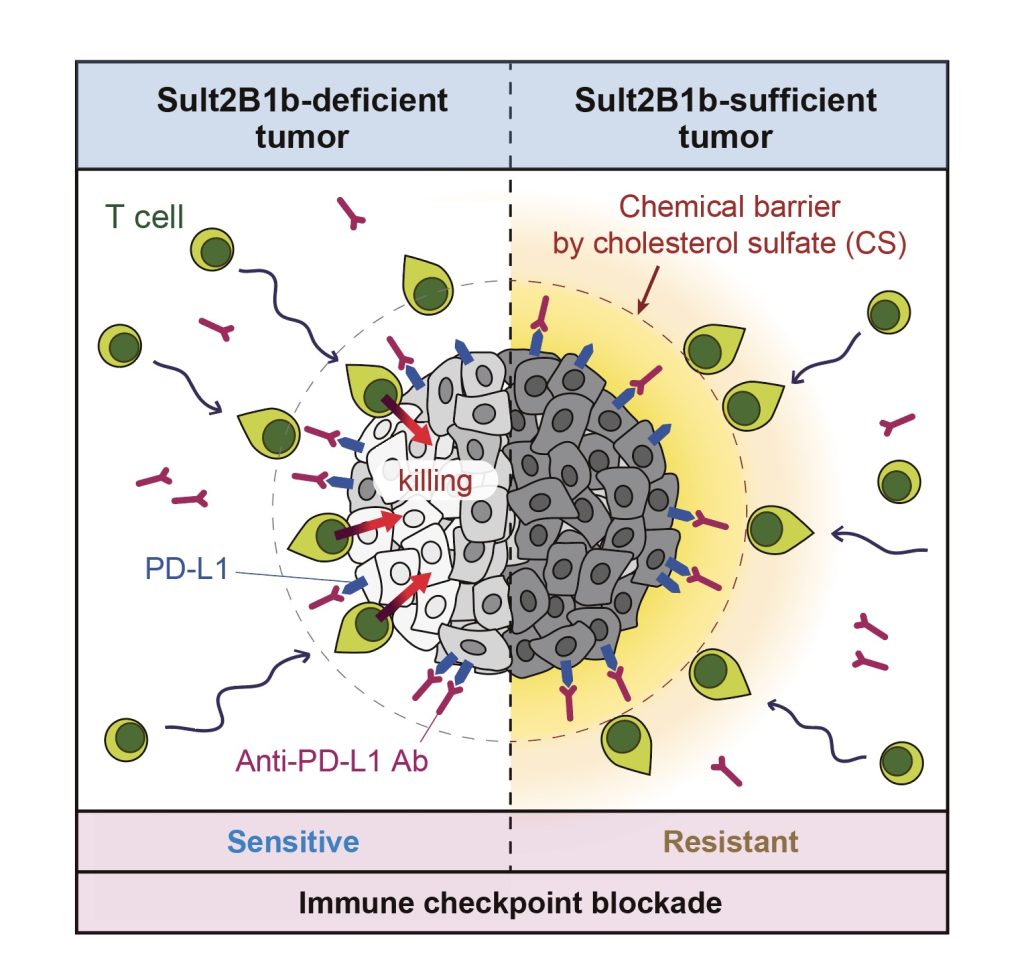
Cancer-derived cholesterol sulfate is a key mediator to prevent tumor infiltration by effector T cells.
Tatsuguchi T, Uruno T, Sugiura Y, Sakata D, Izumi Y, Sakurai T, Hattori Y, Oki E, Kubota N, Nishimoto K, Oyama M, Kunimura K, Ohki T, Bamba T, Tahara H, Sakamoto M, Nakamura M, Suematsu M, Fukui Y:
International Immunology 34(5): 277-289, 2022.
Effective tumor immunotherapy requires physical contact of T cells with cancer cells. However, tumors often constitute a specialized microenvironment that excludes T cells from the vicinity of cancer cells, and its underlying mechanisms are still poorly understood. DOCK2 is a Rac activator critical for migration and activation of lymphocytes. We herein show that cancer-derived cholesterol sulfate (CS), a lipid product of the sulfotransferase SULT2B1b, acts as a DOCK2 inhibitor and prevents tumor infiltration by effector T cells. Using clinical samples, we found that CS was abundantly produced in certain types of human cancers such as colon cancers. Functionally, CS-producing cancer cells exhibited resistance to cancer-specific T-cell transfer and immune checkpoint blockade. Although SULT2B1b is known to sulfate oxysterols and inactivate their tumor-promoting activity, the expression levels of cholesterol hydroxylases, which mediate oxysterol production, are low in SULT2B1b-expressing cancers. Therefore, SULT2B1b inhibition could be a therapeutic strategy to disrupt tumor immune evasion in oxysterol-non-producing cancers. Thus, our findings define a previously unknown mechanism for tumor immune evasion and provide a novel insight into the development of effective immunotherapies.
https://researchmap.jp/-kunimura-/published_papers/36294693